




Radiant Floor Heating: Which Floor Coating Is Best for Comfort and Performance?
Radiant floor heating isn’t just about warm feet. It enhances your home’s comfort, distributes heat evenly, and provides consistent warmth that regular systems can’t match. You can install radiant heating in any space with a concrete slab, whether it’s a basement, bathroom, loft, garage, or commercial area.
But here’s the common question homeowners ask most often: Which floor coating works best with a heated floor?
At B.Protek Concrete Coatings, we install thousands of square feet of coatings each year, many over radiant heating systems. We understand exactly how heat, concrete, and coatings interact.
This guide will help you select the right coating for your space, heating system, and the level of performance you desire.
1.Electric vs Hydronic Radiant Floors: What Really Matters for Your Coating?
There are two primary types of radiant heating systems:
Electric Radiant Heating
- Ideal for renovations
- Quick installation
- Powered by electric cables or mats
- Commonly used in bathrooms, kitchens, basements, and residential garages
Hydronic Radiant Heating (Hot Water Heating)
- Best suited for large areas or whole-home heating
- Uses heated water circulated through tubing
- Popular in commercial buildings, chalets, workshops, and large garages
- Very energy-efficient over long distances
Good news: whether your system is electric or hydronic doesn’t significantly impact your coating choices.
What really matters is how well the floor coating can transfer heat, accommodate thermal expansion, and uphold adhesion over time.
Why Your Floor Coating Influences Heat Performance More Than You Realise
A detail many homeowners never hear about: If your coating is too thick or too insulating, your radiant floor can lose up to 30 percent of its heating efficiency.
To perform well over a heated slab, a floor coating must be:
- thin
- dense
- thermally conductive
- bonded to a properly prepared concrete surface
That’s why concrete-based and resin-based coatings like polyaspartic and epoxy work so well. They allow heat to move easily, distribute warmth evenly, and remain strong even when temperatures fluctuate.
The Best Floor Coatings for Radiant Floors
Expert Comparison for Homes, Basements, Garages, Chalets, and Commercial Spaces
Based on our experience across Canada, these coatings consistently deliver top performance over radiant heating systems.
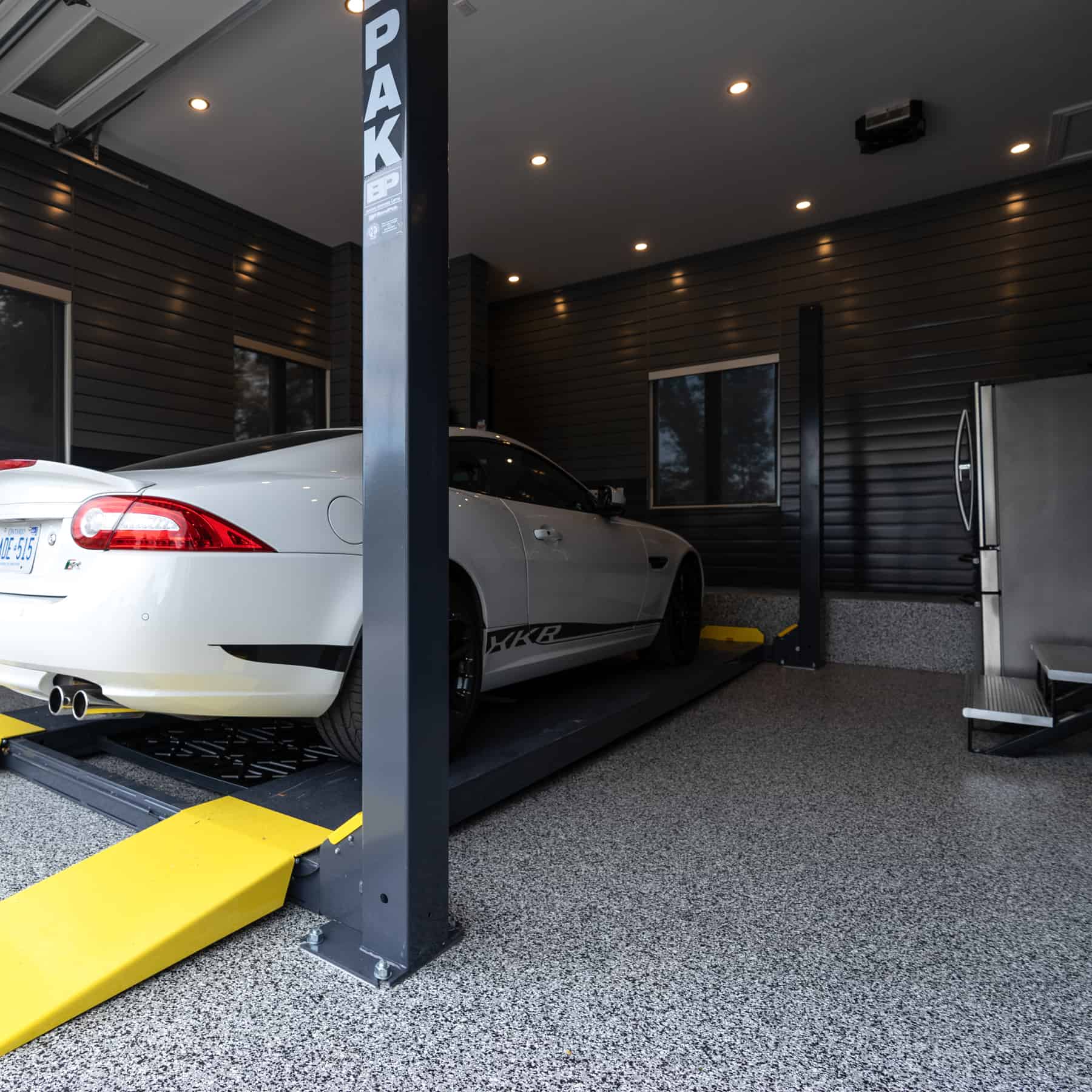
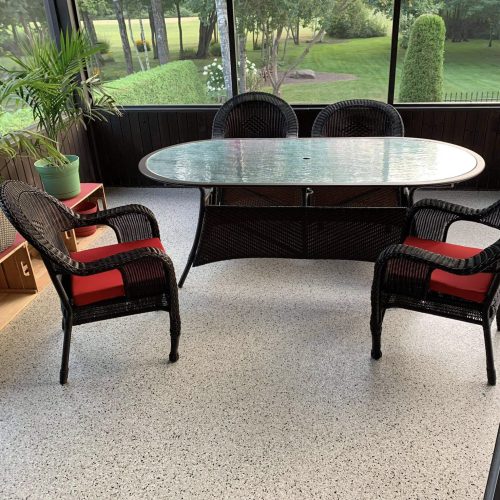
Polyaspartic with Flakes
Thermal conductivity: excellent – Thickness: slim
Polyaspartic coatings are a top choice for radiant floors. They transfer heat quickly, stay flexible as temperatures change, and are very durable.
Best suited for:
- Basements
- Heated garages
- Mudrooms
- Workshops
- Commercial spaces
Key benefits:
- Extremely durable and impact-resistant
- UV-stable and salt-resistant
- Easy to clean
- Installed in as little as one day
100 Percent Solids Epoxy
Thermal performance: strong – Design options: extensive
Epoxy is a popular choice for its smooth appearance, durable finish, and variety of options. On a radiant floor, it provides reliable heat transfer and durability.
Best suited for:
- kitchens
- basements
- lofts
- multi-purpose rooms
- -retail spaces
What makes it stand out:
- Seamless and hygienic surface
- Excellent chemical and stain resistance
- Wide range of colours and finishes
- Long-lasting performance with proper surface preparation
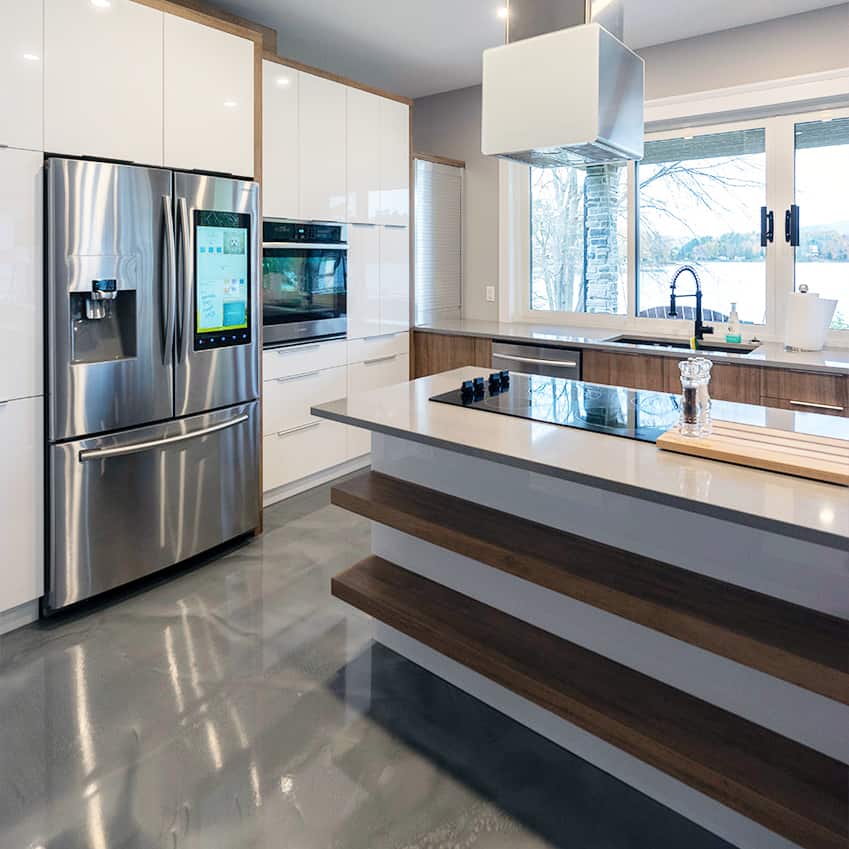
Metallic Epoxy
Thermal performance: strong – Aesthetic impact: premium
Metallic epoxy creates a bold, three-dimensional appearance, resembling water, marble, or melted metal. It performs as well as regular epoxy on radiant floors and offers a distinctive style.
Best suited for:
- Modern kitchens
- Open-concept living spaces
- Lofts
- Showrooms
- Upscale commercial settings
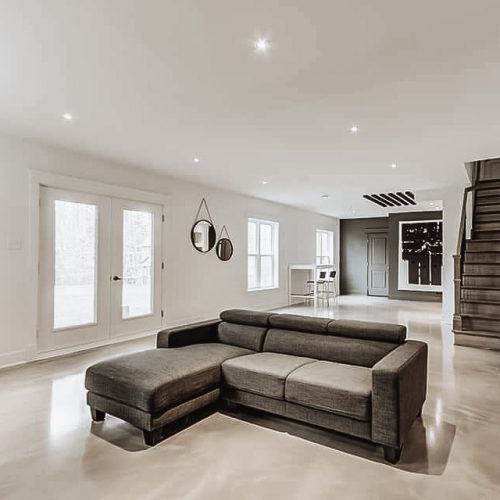
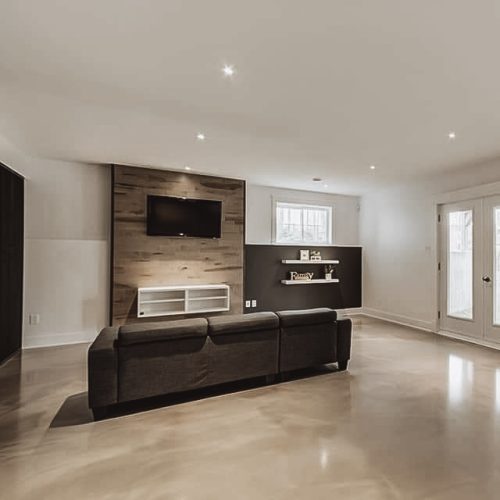
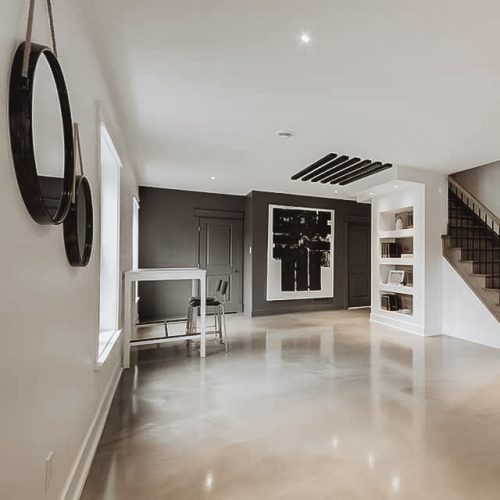
Clear Concrete Finish
Thermal conductivity: excellent – Aesthetic: natural and timeless
If you prefer a simple, natural style, a clear concrete finish is ideal for radiant heating. It distributes heat evenly and is very easy to maintain.
Best suited for:
- chalets
- basements
- lofts
- commercial studios
- open-concept living areas
Heated Ceramic Tile (for comparison)
Ceramic tiles aren’t a service we offer at B.Protek, but many homeowners inquire about them. It works very well with radiant systems because it’s dense and transfers heat quickly, especially in bathrooms and kitchens.
Radiant Heating in Garages: What Most People Aren’t Told
Radiant floor heating is growing in Canadian garages, but some key details are often missed.
Here’s what matters:
- A heated slab helps evaporate moisture more quickly, reducing corrosion and ice spots.
- It minimises thermal shock during winter.
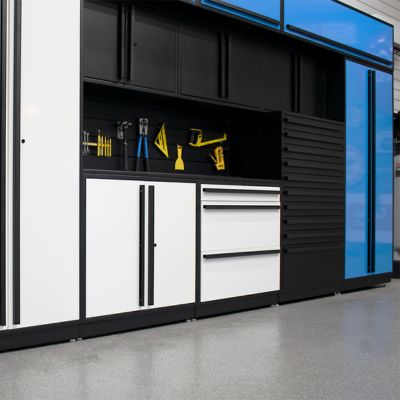
- A thin, dense coating, such as polyaspartic, offers the best heat transfer.
- Some materials commonly used in garages (paint, rubber mats, sealers) can trap heat and decrease efficiency.
Choosing a coating designed for heated concrete ensures your system performs effectively and lasts longer.
5. Applying a Coating Over an Existing Heated Slab: Is It Feasible?
Yes, absolutely.
We actually resurface heated slabs regularly. What determines success is the quality of the surface preparation, including:
- Diamond grinding
- Opening the concrete’s profile
- Moisture testing
- Repairing cracks or damaged areas
- Removing glue, paint, or old coatings
A heated slab requires careful preparation to ensure the coating adheres properly over time, especially as temperatures fluctuate.
6. What Is the Cost of a Radiant Heated Floor and Coating?
Costs depend on:
- The type of radiant system
- the size of the space
- the condition of the concrete
- and the coating you choose
Most residential coating projects typically cost between $10 and $18 per square foot, depending on the material and complexity. A site visit is usually required to provide an accurate estimate based on your space.
Basement
Best: polyaspartic, epoxy, clear concrete
Why: provides strong conductivity and moisture resistance
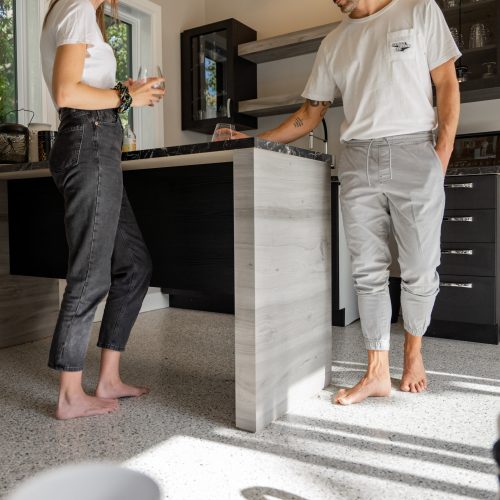
Kitchen
Best: 100 percent solids epoxy
Why: offers seamless application, easy to clean, and is hygienic
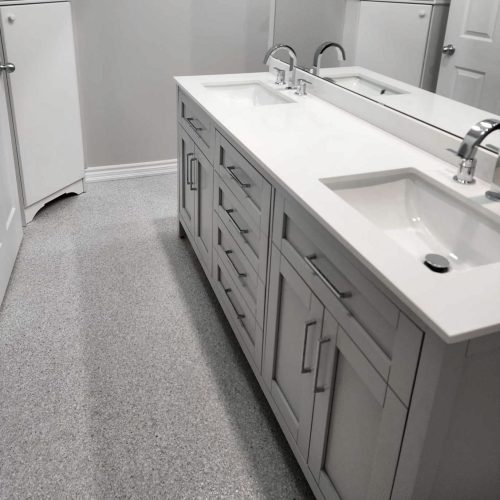
Bathroom
Best: ceramic tile or epoxy
Why: ensures heat efficiency and slip resistance
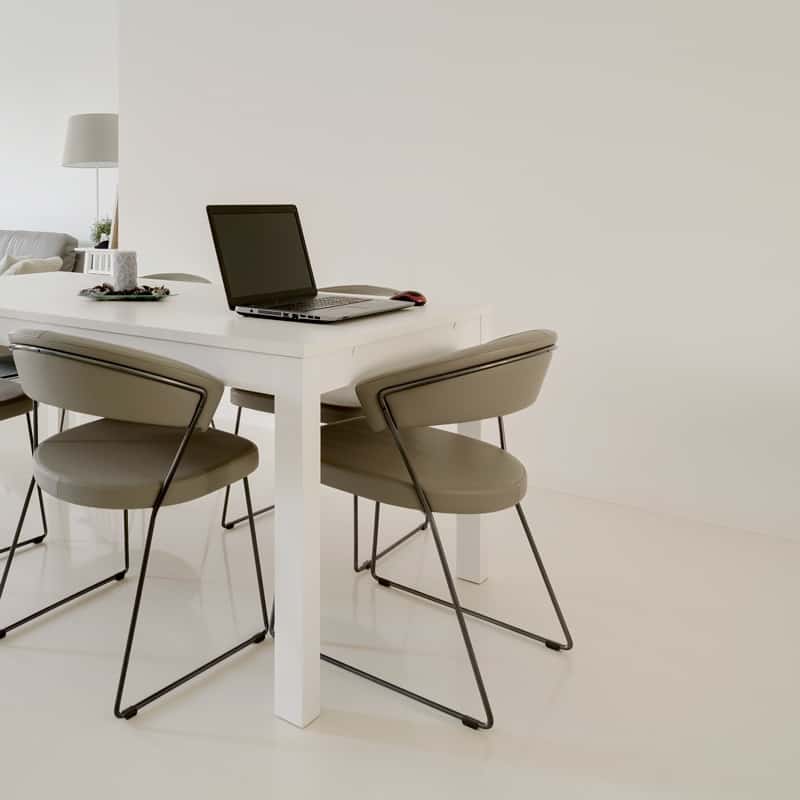
Loft or open-concept living space
Best: metallic epoxy or clear concrete
Why: creates a modern look and promotes efficient heat distribution
Garage
Best: polyaspartic with flakes
Why: delivers impact and salt resistance and has ideal heat transfer
Elevate your comfort one floor at a time.
A radiant heated floor can transform any space, from the basement to the kitchen to the garage. Choosing the right coating ensures not just comfort, but long-lasting durability and consistent warmth throughout your home or building. If you want expert guidance tailored to your space, your heating system, and your concrete slab, our team is here to assist.
Your space, our expertise. Contact B.Protek today for a quick, professional consultation.
YOUR GARAGE CAN BE BETTER. WE’D BET ON IT!
A turnkey setup, without the hassle.
Still got questions?
Let us know!
Fill the form bellow