





Freeze-Thaw Cycles and Concrete: How to Protect Your Garage, Stairs and Outdoor Surfaces Through Canadian Winters
Freeze-Thaw Cycles and Concrete: How to Protect Your Garage, Stairs and Outdoor Surfaces Through Canadian Winters
Every spring, it’s the same moment of truth. The snow melts, and what’s underneath tells the story of the winter: scaling on the front steps, new cracks across the patio, a driveway that’s started to crumble at the edges, and a garage floor that’s somehow worse than it was in October. You know it won’t fix itself, but it’s easy to put off — until next spring, when the damage is even more extensive.
This cycle repeats itself for homeowners across Canada every single year. It doesn’t have to.
Bare concrete is naturally vulnerable to our climate. And Canada’s climate is unforgiving: temperatures swinging from -30°C in January to +35°C in July, dozens of freeze-thaw cycles between November and April, and heavy use of road salt and calcium chloride on every surface that sees winter traffic. Your concrete — whether it’s inside your garage or fully exposed to the elements — absorbs all of it, winter after winter.
In this article, we’ll explain exactly what happens inside your concrete with every freeze-thaw cycle, why outdoor surfaces are even more vulnerable than your garage floor, and how professional coating and resurfacing can protect — and often save — your concrete before replacement becomes the only option.
What Actually Happens to Your Concrete During a Freeze-Thaw Cycle
Concrete looks solid, but it’s a porous material. It contains thousands of microscopic pores and hairline cracks that are invisible to the naked eye — and these pores absorb moisture constantly, from rain, melting snow, and condensation.
Here’s what happens with every freeze-thaw cycle:
- Water infiltrates the pores during thaw periods or mild spells.
- Temperatures drop and that water freezes inside the concrete. Water expands by roughly 9% when it freezes, creating intense pressure against the walls of every pore and hairline crack it occupies.
- A thaw follows, releasing that pressure — but the cracks are now slightly wider than before. More water can infiltrate during the next cycle.
- The process repeats — sometimes dozens of times in a single Canadian winter. With each cycle, the damage compounds: surface scaling, widening cracks, progressive crumbling.
This is called freeze-thaw scaling, and it’s the primary cause of concrete deterioration in residential garages across the country.
Why Road Salt and Calcium Make Everything Worse
Salt and calcium chloride follow your vehicle home every winter, tracked in on your tires after every drive. They don’t stay on the road.
These chemicals amplify freeze-thaw damage in two ways:
They lower water’s freezing point. Salty water stays liquid longer, penetrating deeper into concrete pores before freezing at a lower temperature — effectively multiplying the number of freeze-thaw cycles your concrete endures.
They create osmotic pressure inside concrete pores, drawing more water into already-saturated zones and intensifying the internal stress during freezing.
Calcium chloride (CaCl₂) — the white granular product widely used across Canada — is particularly aggressive chemically. Magnesium chloride (MgCl₂) is even more so. Even ordinary road salt (sodium chloride) causes significant cumulative damage when it accumulates on an unprotected slab year after year.
The Hot Tire Problem: A Garage-Specific Threat
There’s another threat specific to garages that most homeowners don’t think about: the thermal shock of hot tires on a cold floor.
When you pull into your garage after driving in -20°C weather, your tires are still warm from road friction. On contact with a frozen or near-frozen floor, the sudden temperature difference creates mechanical stress on the surface. On an unprotected slab or a poorly suited coating, this repeated thermal shock causes delamination, cracking, or surface failure over time.
This is one of the reasons standard epoxy is not the right product for Canadian garage floors. Epoxy is a rigid material — it doesn’t flex with temperature changes, and it struggles with the repeated thermal stress of Canadian winters. The result is typically cracking, yellowing, or peeling within a few years of installation.
Outdoor Surfaces: Even More Exposed Than Your Garage
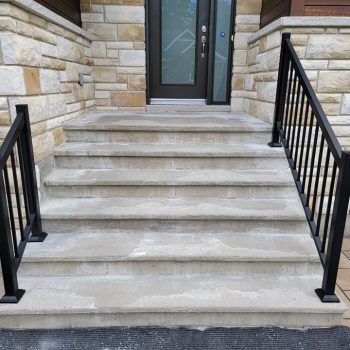
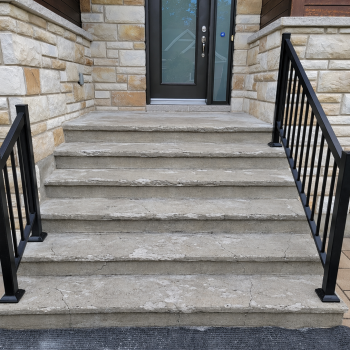
If your garage floor takes a beating from freeze-thaw cycles, your outdoor concrete surfaces take the full force of a Canadian winter with no shelter at all. Stairs, patios, front porches, driveways, and walkways are directly exposed to precipitation, overnight freezing, February thaws, and the calcium and salt spread generously across every surface that sees foot or vehicle traffic. The result: outdoor concrete typically deteriorates two to three times faster than an interior slab.
That’s why every spring, when the snow finally melts, the damage shows up there first. A stair nosing that crumbled at the edge. A patio that’s scaling across several square feet. A driveway crossed with new cracks. Patches where the concrete has become soft and crumbly. You may have noticed warning signs last fall — but under a metre of snow, it’s easy not to think about it until the melt reveals everything.
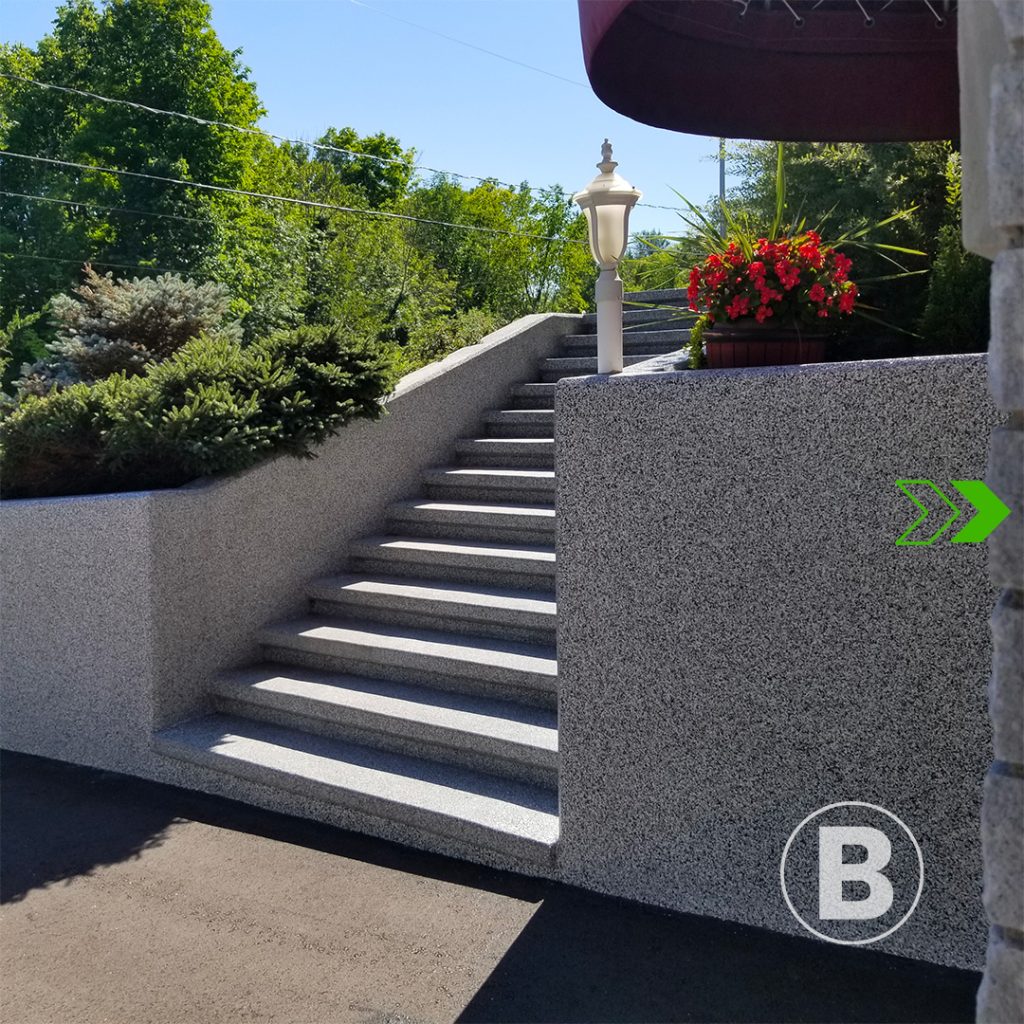
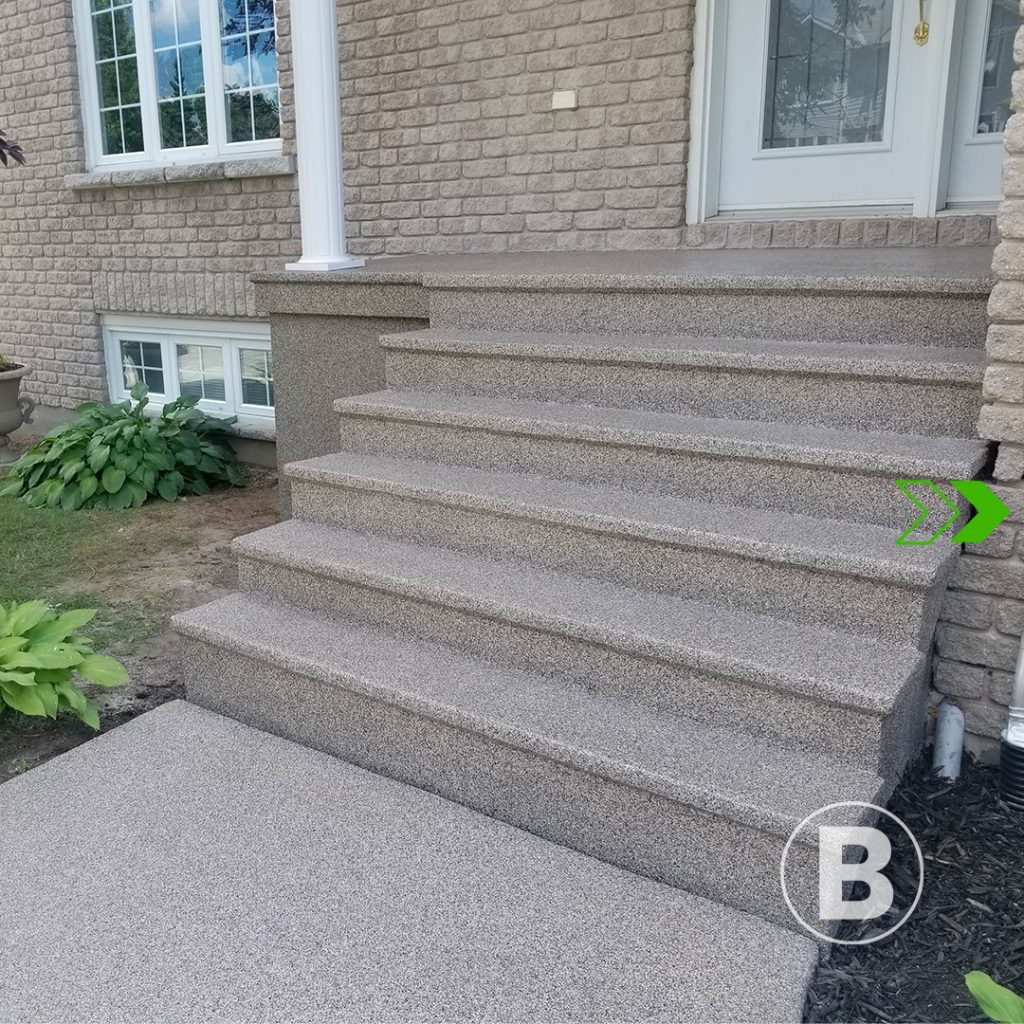
Stairs are particularly vulnerable because water naturally pools on horizontal surfaces, infiltrates the concrete, and freezes. Over the years, stair nosings erode, edges round off, and surfaces become dangerously slippery. Beyond the aesthetic issue, deteriorating stairs are a real safety hazard and a liability concern for homeowners.
Patios and front porches are often thinner slabs, more susceptible to thermal movement. Moisture can also infiltrate under the slab through joints or cracks, damaging not just the concrete but the structure below it.
Driveways and walkways accumulate salt and calcium throughout the season. With repeated vehicle traffic and freeze-thaw cycling, the surface progressively weakens until resurfacing — or full replacement — becomes unavoidable.
Repairing and protecting always costs less than replacing
This is the reality many homeowners discover too late: concrete that’s damaged but still structurally sound can be repaired and protected for a fraction of the cost of replacement. Replacing a driveway, a set of stairs, or a concrete patio in Canada means thousands — sometimes tens of thousands — of dollars in excavation, forming, concrete, and labour. Not to mention permits, scheduling delays, and weeks of disruption.
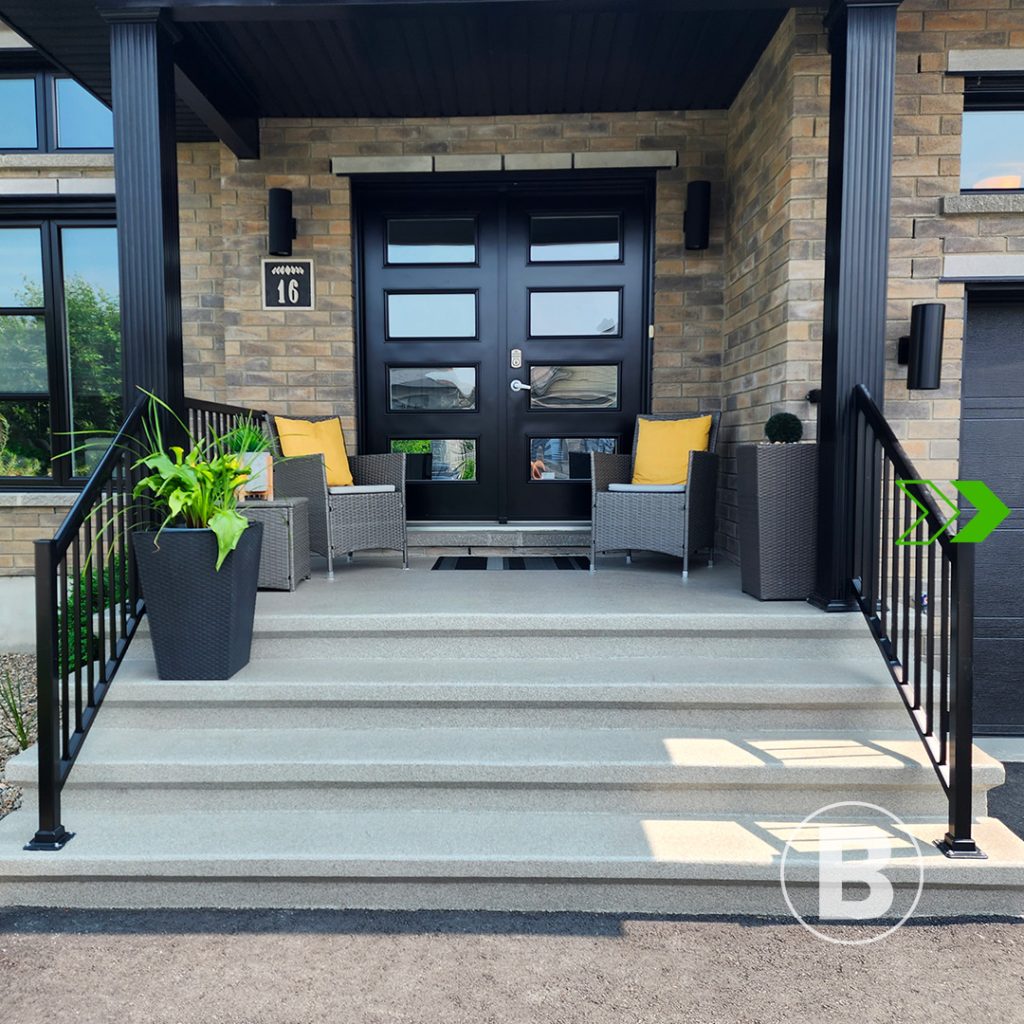
Professional resurfacing with a protective coating — applied while the concrete is still structurally intact — costs a fraction of that, delivers a fresh and attractive surface, and protects the concrete for the next 20 years. The right time to act is before one more winter turns a repairable problem into an irreparable one.
Signs Your Concrete Is Already Being Damaged
Before thinking about a coating, it’s worth knowing what to look for. Here are the signs that freeze-thaw cycles have already taken a toll on your concrete:
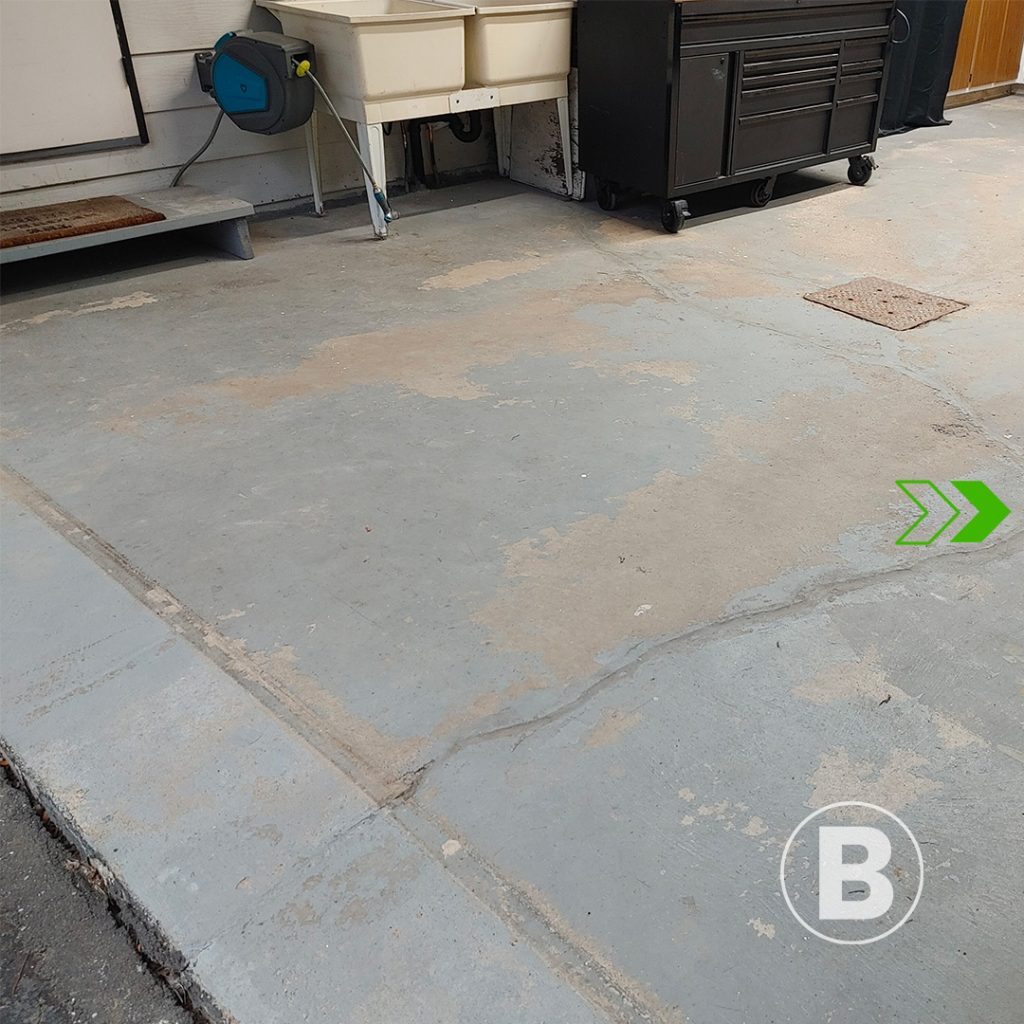
- Surface scaling: the top layer of concrete is flaking off in small chips or powdering
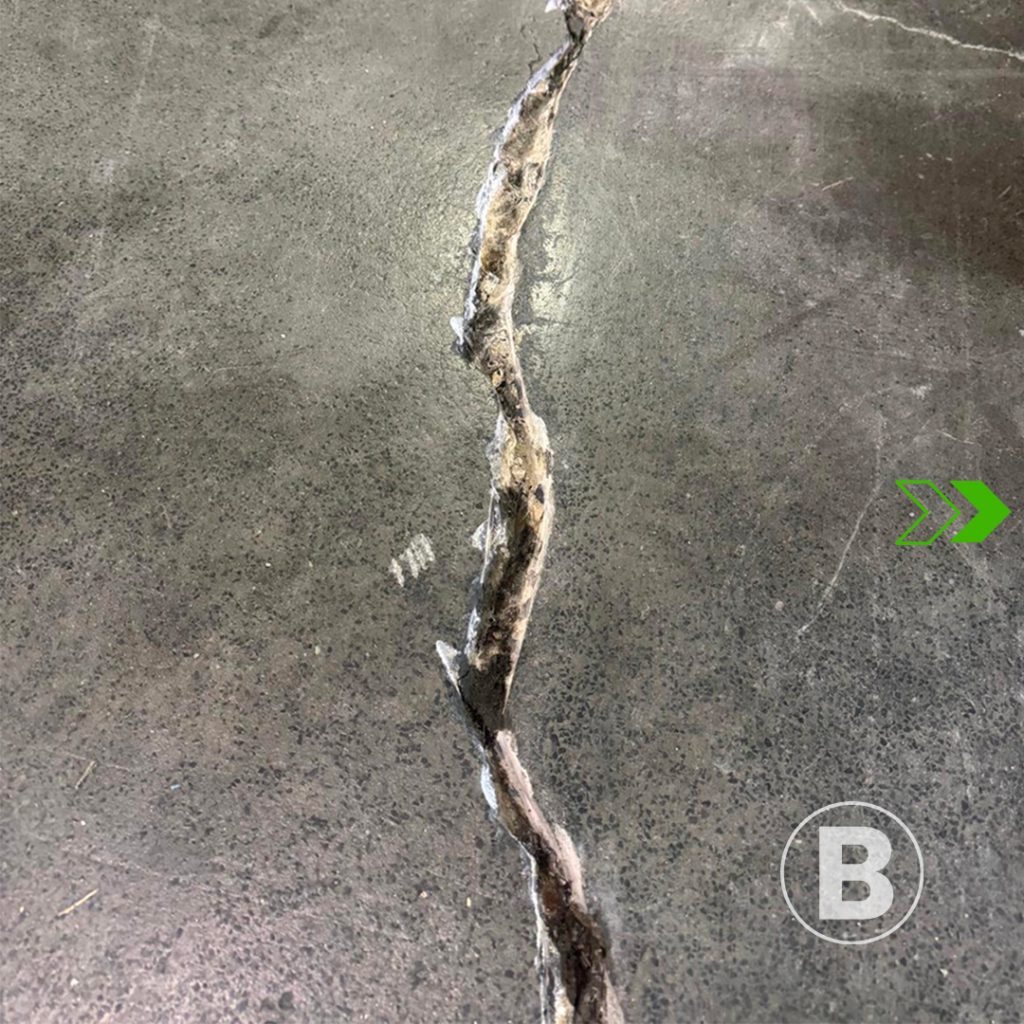
- New or widening cracks from one season to the next
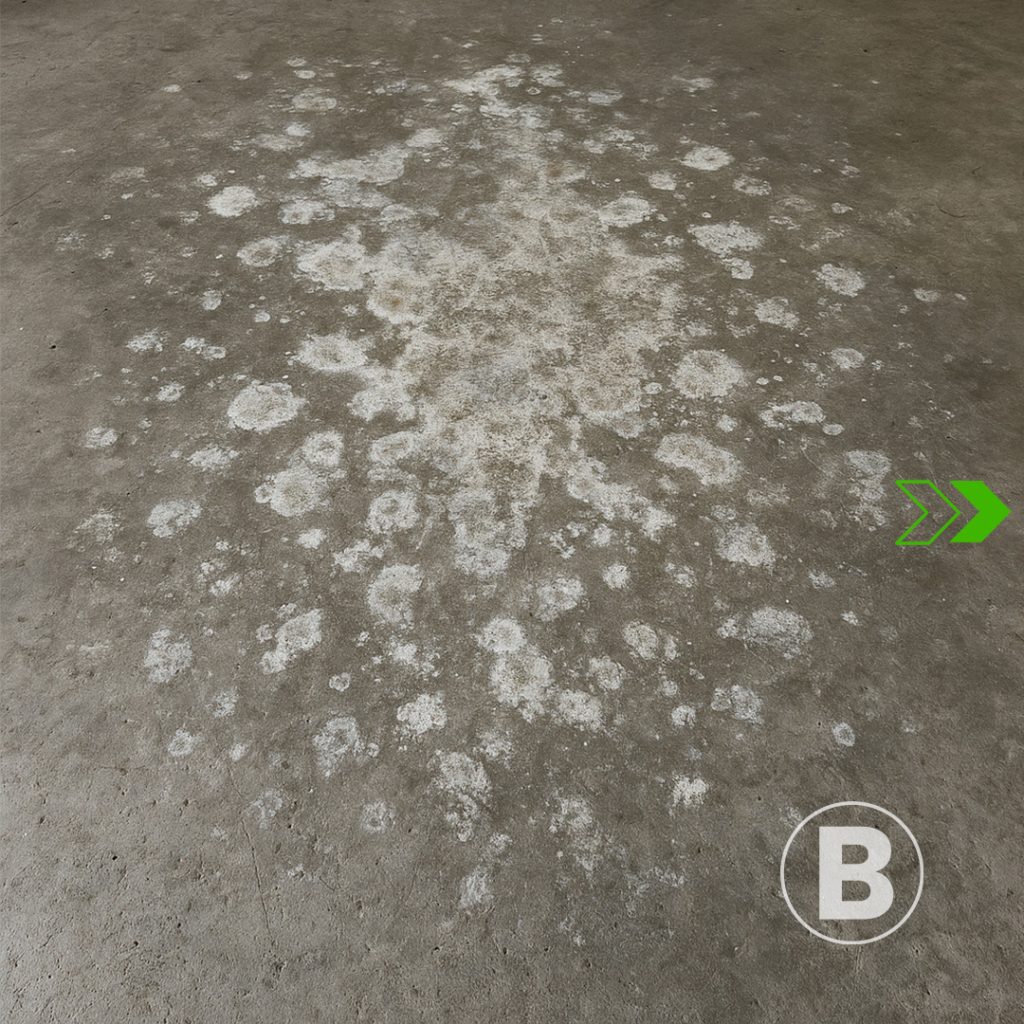
- White powdery deposits (efflorescence): a sign that mineral salts are being pushed up through the concrete by moisture
- Rough or granular patches that weren’t there a few years ago
- Persistent concrete dust despite regular sweeping
If you recognize one or more of these signs, your slab is already weakened. The good news is that a professional can assess the damage, properly prepare the surface, and apply a coating that restores protection — without replacing the entire slab in most cases.
Why Polyaspartic Is the Right Answer for Canadian Winters
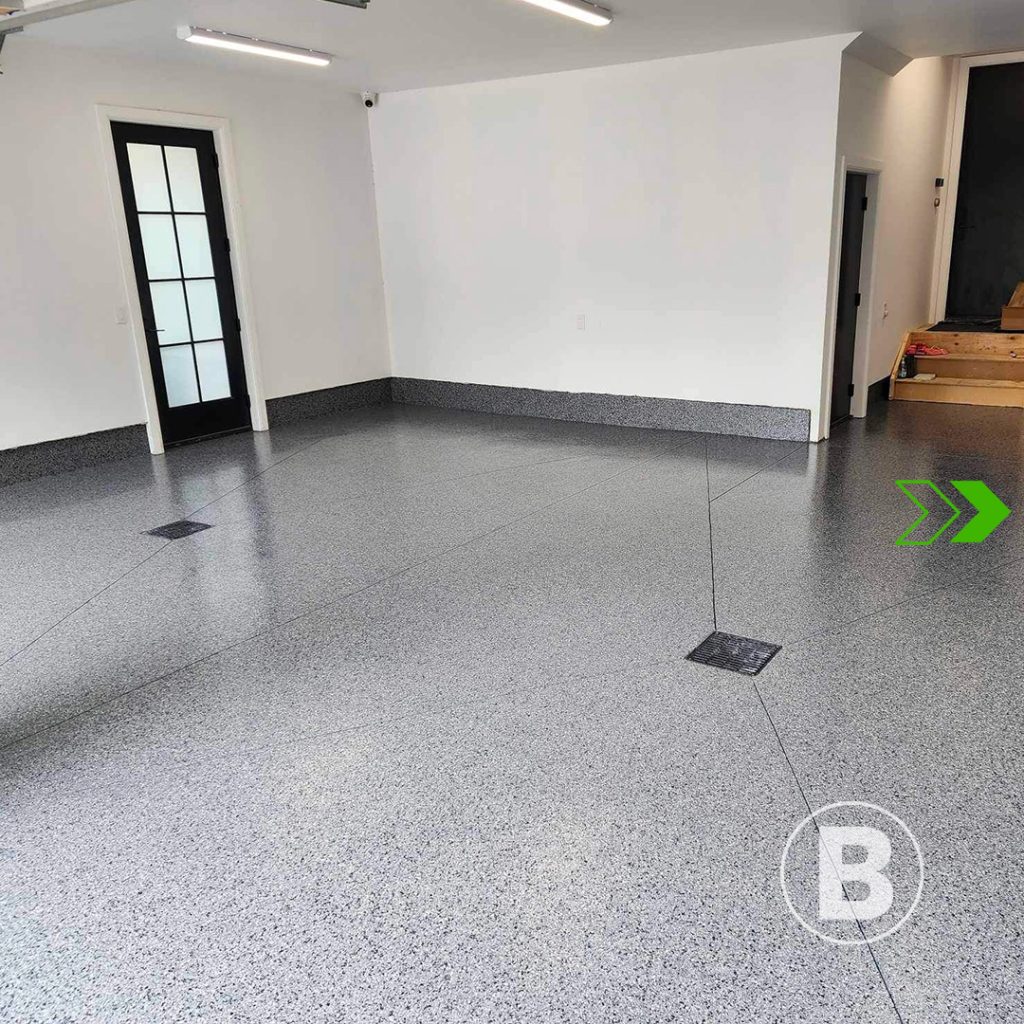
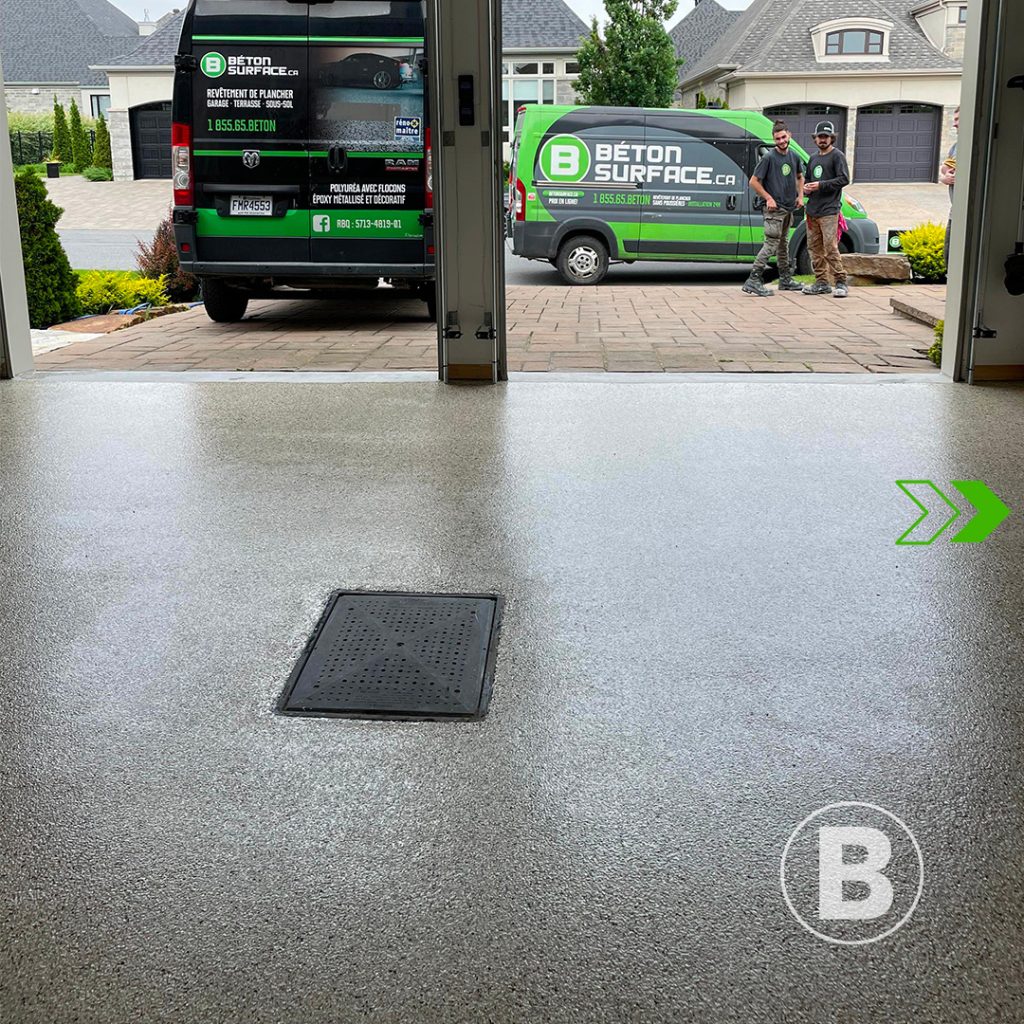
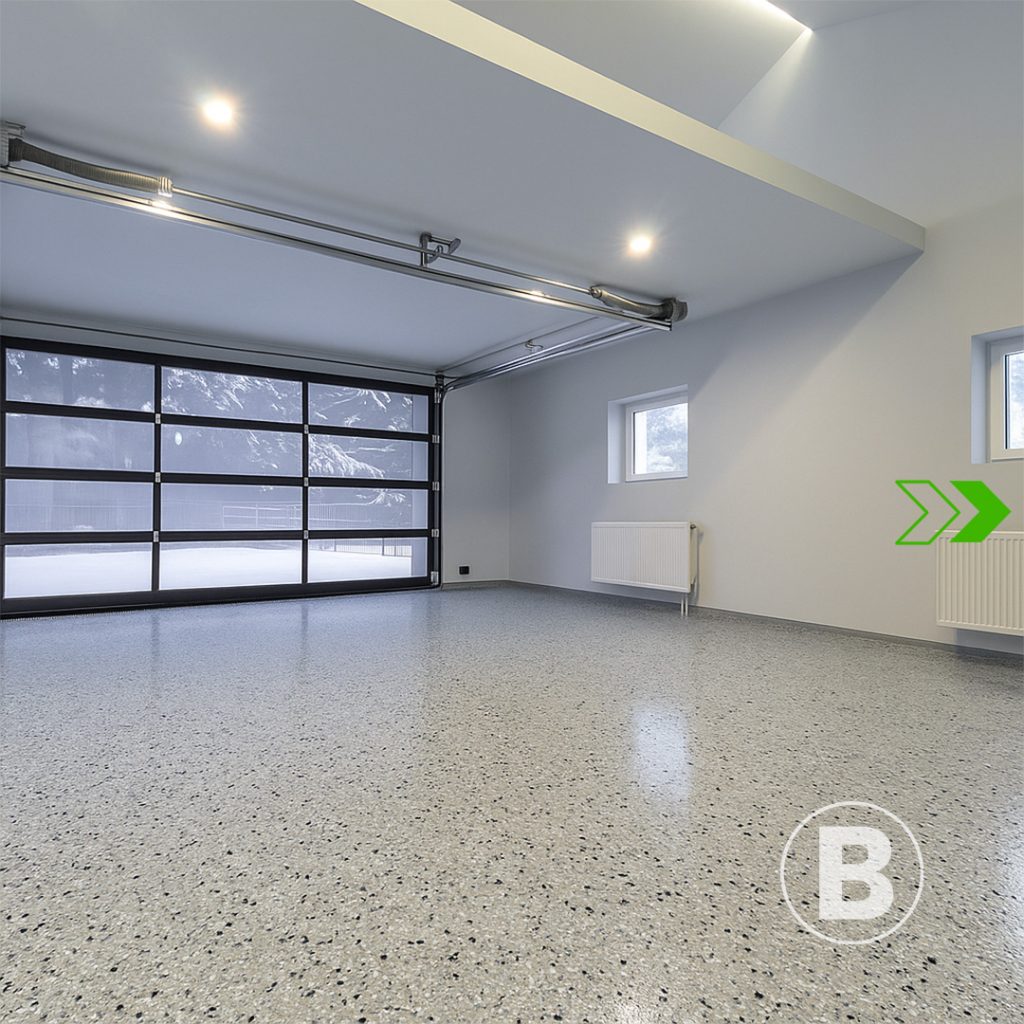
At B.Protek, the product we recommend and install for garage floors is polyaspartic with vinyl flakes. That choice is deliberate — it’s the coating best suited to the specific demands of the Canadian climate.
- Flexibility through thermal cycling. Unlike rigid epoxy, polyaspartic is a flexible material that can contract and expand with the concrete without cracking. This is the most important property for surviving dozens of freeze-thaw cycles every winter.
- Waterproof barrier. Polyaspartic forms a seamless, waterproof surface that prevents water, melting snow, and salt solutions from penetrating the concrete’s pores. Without water infiltration, the freeze-thaw damage cycle is stopped at the source.
- Chemical resistance to salt and calcium. The coating resists the aggressive chemicals your tires track in from winter roads without degrading or delaminating.
- UV stability. Unlike standard epoxy, polyaspartic doesn’t yellow with light exposure — an important advantage in garages with windows or frequently open doors.
One-day installation. Polyaspartic cures quickly even in cooler conditions, minimizing downtime and getting your garage back to use fast.
Concrete Preparation: The Step You Can’t Skip
A coating — no matter how high-performing — can’t compensate for poor surface preparation. If the concrete is porous, contaminated (oil, calcium buildup, old sealers), or has untreated cracks, the coating won’t bond correctly and will delaminate early, often within the first winter.
At B.Protek, every project begins with full mechanical preparation using industrial diamond grinders. This process:
- removes the contaminated surface layer (oil, calcium deposits, old sealer residue)
- opens the concrete’s pores to create the optimal bonding profile
- reveals cracks that might not be visible on the surface
- ensures maximum adhesion between the concrete and the new coating
Cracks are repaired individually before the coating is applied. Properly prepared concrete is what makes the difference between a coating that lasts decades and one that fails after a few seasons.
When Is the Best Time to Have a Coating Installed?
The ideal window is spring or summer, for a few practical reasons:
- Concrete has had time to dry out after spring thaw, and moisture levels in the slab are at their lowest
- Application temperatures are ideal for polyaspartic
- Your garage will be fully protected before the next fall frost
Fall installations are possible but require confirming that the slab is adequately dry and that temperatures will remain stable during and after application. One of our local advisors can assess feasibility during a free on-site visit.
Frequently Asked Questions
- My concrete is already scaling badly. Can a coating still help? In most cases, yes. If the slab isn’t structurally compromised (no significant heaving or settling), our technicians can mechanically prepare the surface, repair damaged areas, and apply the coating on a sound base. The free inspection is the best way to assess exactly what your slab needs.
- Will the coating just cover up cracks without fixing them? No — and covering cracks without repairing them is exactly what causes early coating failure. Our installers repair every crack before the coating goes down. Trapping an active crack under a coating guarantees it will continue to move and cause delamination.
- Will the coating protect my concrete from road salt and calcium? Yes. The polyaspartic barrier is impermeable to salt solutions. The calcium and salt your tires track in will sit on top of the coating surface, where they can be swept or rinsed off — they won’t penetrate your concrete.
- How long does a professional polyaspartic coating last? With professional installation on a properly prepared slab, a polyaspartic coating can last several decades. B-Protek backs its installations with a 20-year adhesion warranty.
- How long after installation before I can use the garage again? Installation is completed in a single day. After that: foot traffic is safe after 24 hours, returning furniture and storage items requires 3 days, and driving a vehicle onto the surface requires a full week. Your installer will confirm exact timelines based on the product applied and temperature conditions on your project day.
Protect Your Concrete Before the Next Winter
The best time to act is before the damage accumulates further. A garage floor in reasonable condition is far simpler and more affordable to coat than a heavily damaged slab requiring extensive repairs.
Contact your local B.Protek franchise for a free on-site inspection and a no-obligation quote — or get a preliminary estimate in minutes using our instant online quote tool.
Article written by the B.Protek team — Canada’s concrete resurfacing experts with over 10 years of experience.
YOUR GARAGE CAN BE BETTER. WE’D BET ON IT!
A turnkey setup, without the hassle.
Still got questions?
Let us know!
Fill the form bellow